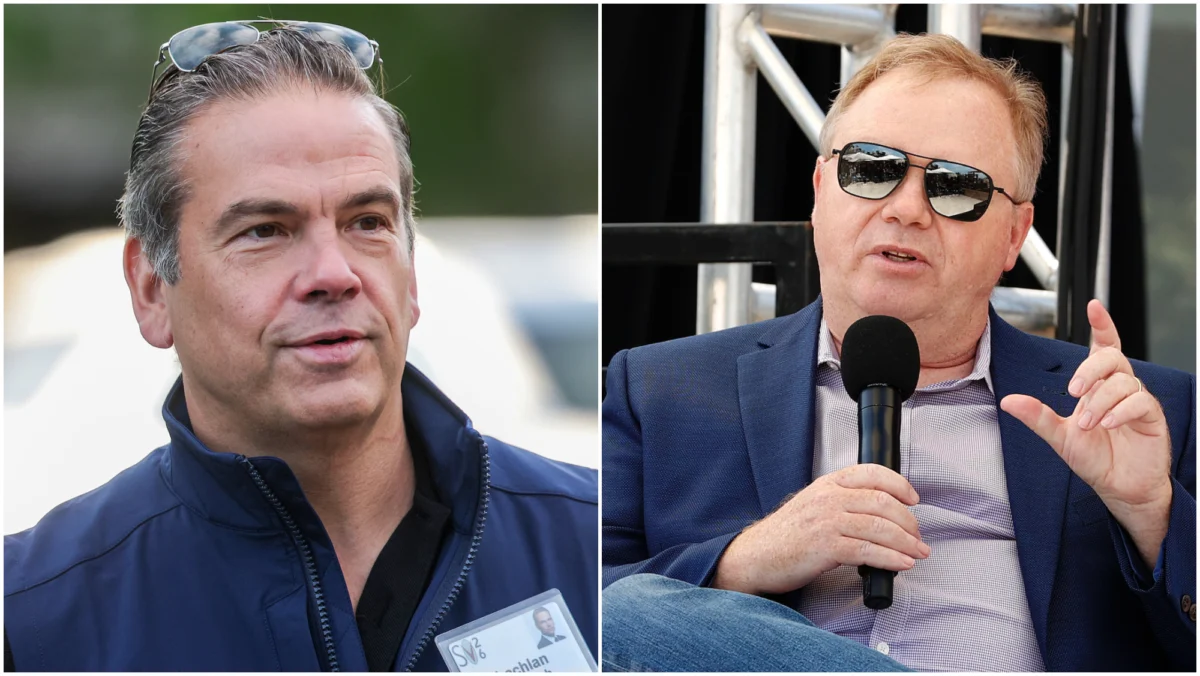
In a move that fundamentally alters the landscape of the global media and entertainment industry, Fox Corp. has officially finalized its $22 billion acquisition of Roku. This landmark merger, which combines one of the world’s most influential traditional broadcasters with the preeminent gateway to the streaming era, creates an unprecedented powerhouse capable of commanding the modern living room. The deal marks the end of an era for Roku as an independent entity and signals a bold, aggressive pivot for Fox, as it seeks to secure its dominance in an increasingly fragmented digital media environment.
The Main Facts: A Convergence of Legacy and Digital
The $22 billion deal represents a massive consolidation of resources. By acquiring Roku, Fox Corp. does not merely acquire a hardware manufacturer; it secures the "operating system" of American television. With more than 100 million households worldwide utilizing Roku devices and software, the company acts as a primary interface for streaming giants including Netflix, YouTube, and Disney+.
Following the acquisition, the internal architecture of Fox has been reorganized to integrate this new asset. Roku will be folded into a newly empowered division, "Fox Digital Platforms," which also houses the burgeoning free-ad-supported streaming television (FAST) service Tubi, the premium streaming service Fox One, and the media investment firm Red Seat Ventures.
A key component of the deal is the continued involvement of Roku founder Anthony Wood. Wood will join the Fox board of directors and assume the role of co-chair of Fox Digital Platforms. His presence is intended to provide continuity and preserve the "innovation culture" that made Roku a household name, while providing the company with the robust financial backing of the Fox enterprise.
A Chronology of the Mega-Merger
The path to this $22 billion integration was characterized by high-stakes negotiations and rapid regulatory scrutiny. The genesis of the deal can be traced back to the autumn of the previous year, when Anthony Wood signaled to the Roku board of directors that he was contemplating a transition away from the day-to-day pressures of leading a publicly traded, independent company.
What began as a quiet deliberation among directors quickly evolved into a formal sale process. As rumors of a potential acquisition swirled, the media industry waited with bated breath to see which giant would swoop in. By the time Fox emerged as the primary suitor, the financial terms were already being aggressively debated.
The formal announcement of the acquisition sent shockwaves through Wall Street. However, the regulatory path was far from certain. In September, the U.S. Department of Justice (DOJ) confirmed it was launching a formal review of the merger, citing concerns over market concentration in the streaming and advertising sectors. Skeptics wondered if the deal would languish in the halls of Washington for years. Instead, in a testament to the legal preparation of both companies, the deal closed in less than five months—a remarkable pace for a transaction of this magnitude. The swift clearance suggests that both companies successfully argued that the deal promotes competition in a crowded streaming market rather than suppressing it.
Supporting Data: The Power of the 100-Million-Household Reach
To understand the gravity of this acquisition, one must look at the data. Roku’s influence extends far beyond its physical streaming sticks and smart TVs; it controls the user interface (UI) through which millions of Americans discover content.
- The Reach: With an install base exceeding 100 million households, Roku is the gatekeeper of the American living room.
- The Ecosystem: Through the Roku platform, users engage in a massive volume of transactions, including subscriptions to premium services and the viewing of ad-supported content.
- The FAST Synergy: The marriage of Tubi and the Roku Channel—two of the largest free, ad-supported streaming platforms in existence—gives Fox a dominant share of the growing FAST market. Advertisers are increasingly shifting budgets toward FAST services, and Fox now controls the largest inventory of this type in the industry.
By leveraging Fox’s deep advertising sales infrastructure and integrating it with Roku’s data-rich interface, the combined company is poised to offer marketers unprecedented targeting capabilities. Fox can now track a user’s journey from a broadcast commercial to a streaming engagement on a Roku-enabled device, closing the loop on a level of attribution that traditional media has struggled to achieve.
Official Responses: Aligning Visions for the Future
The leadership of both organizations has been quick to frame the deal as a mutually beneficial "growth engine."
Fox CEO Lachlan Murdoch emphasized that the acquisition is a cornerstone of the company’s long-term strategy. In a formal statement, Murdoch remarked, “The closing of this acquisition advances the long-term strategy of Fox. Beginning today, our top priority for the combined company is to continue to relentlessly serve audiences and partners, while reinforcing the openness and choice that is the essence of the Roku platform. Our shared entrepreneurial passion and clear conviction toward building the future together with our new Roku colleagues gives us great confidence in the opportunities ahead of us.”
Anthony Wood, speaking to the future of the platform, emphasized that the core mission—to make TV easier to watch—remains intact. “We started Roku more than two decades ago to give people a better way to watch TV, and that mission doesn’t change today,” Wood stated. “What does change is our reach and resources. Fox has a deep respect for Roku’s culture and wholly shares our commitment to staying open to every content partner. Our teams will keep building and innovating as they always have, now with the support and capabilities of Fox behind us.”
Implications: The Future of Media and Streaming
The implications of this merger are profound and will likely trigger a ripple effect across the media landscape.
1. The Death of the "Pure" Hardware Player
For years, Roku operated as a neutral party—a Switzerland of streaming devices. By being acquired by Fox, a content-heavy media conglomerate, the company loses that "neutral" status. Competitors like Disney, NBCUniversal, and Warner Bros. Discovery may now be forced to reconsider their reliance on a platform owned by a direct competitor. This could accelerate the development of proprietary streaming interfaces or lead to increased pressure on regulators to ensure that Roku remains "open" to all content partners.
2. The Rise of the "Streaming Bundle"
Roku already facilitates subscriptions to various services through its platform. Under Fox, this functionality is likely to become more aggressive. We can expect to see deeper integration between Fox content and third-party services, potentially leading to bundled subscription models that favor the Fox-Roku ecosystem. This "super-aggregator" model is becoming the gold standard for combating "subscription fatigue" among consumers.
3. Advertising Dominance
Perhaps the most immediate impact will be in the advertising sector. Fox has long been a master of the linear ad market. By combining this with Roku’s programmatic advertising prowess, Fox creates a dual-threat capability that can offer advertisers access to both mass-market broadcast audiences and highly targeted streaming demographics. This effectively turns the Roku platform into a massive, data-driven billboard for the entire Fox media portfolio.
4. Strategic Succession
The acquisition also resolves questions regarding the future of the Roku brand. With Wood transitioning into a co-chair role at Fox Digital Platforms, the company gains a visionary technologist who understands the nuances of the streaming interface. The move allows Wood to step back from the grind of running a standalone public company while retaining the resources to innovate on a global scale.
Conclusion: A New Era for Fox Corp.
As the dust settles on the $22 billion acquisition, the industry is left to grapple with a new reality. Fox Corp. has successfully transitioned from a traditional broadcaster into a vertically integrated digital media giant. By securing the "gateway to the TV," they have insulated themselves against the decline of cable and positioned themselves to capture the lion’s share of the digital advertising future.
The success of this merger will ultimately be measured by whether Fox can maintain the delicate balance of keeping Roku an "open" platform while extracting the synergistic value it paid so dearly to acquire. For now, one thing is certain: the competition for the American living room has entered its most aggressive phase yet, and the new, enlarged Fox Corp. is clearly holding the remote.