Main Facts: The Triumph of a Cinematic and Photographic Icon
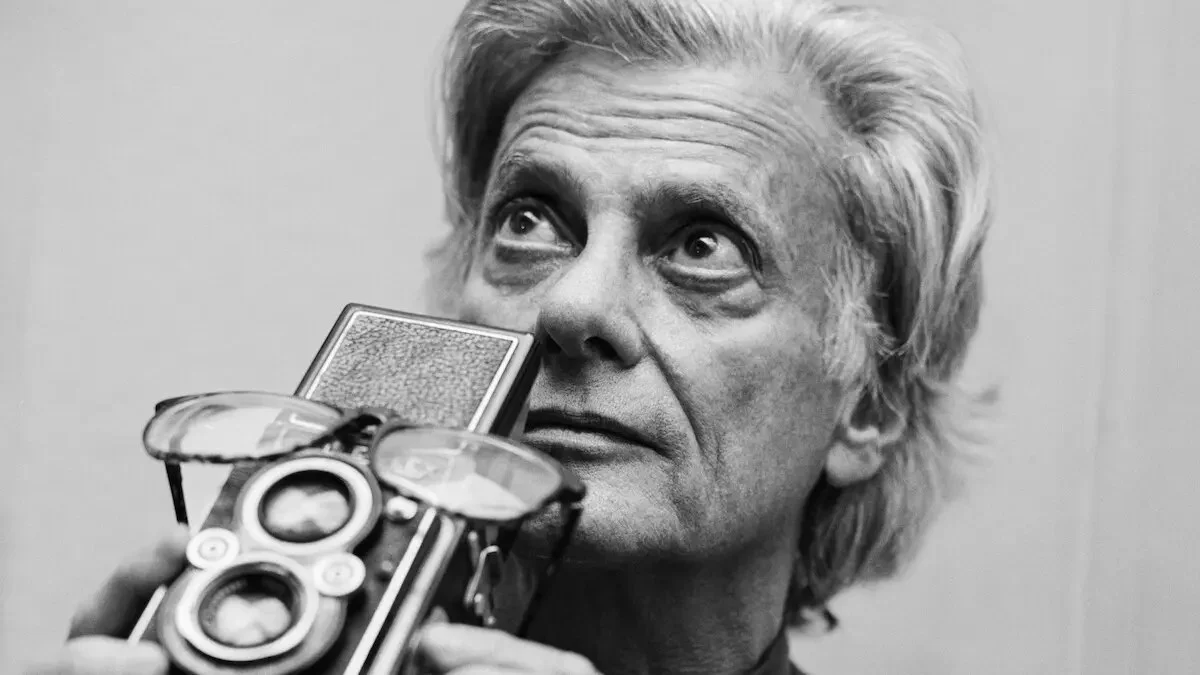
In his latest and arguably finest documentary, acclaimed director Ron Howard turns his lens toward one of the twentieth century’s most influential visual artists: Richard Avedon. Titled simply Avedon, the film is a masterclass in biographical documentary filmmaking. Seamlessly edited by Andrew Morreale with a fluidity that begs to be studied in film schools, the movie weaves together hundreds of iconic photographs, rare archival footage, and incisive contemporary interviews to trace how a single man fundamentally changed the metaphysics of photography.
Premiering to widespread critical acclaim, Avedon does not merely catalogue the life of a legendary image-maker; it decodes the profound paradox at the heart of his work. Avedon was simultaneously the undisputed monarch of high fashion—the architect of a world built on glossy glamour and impossible beauty—and the ultimate democratic humanist, treating everyday workers and cultural titans with the exact same unblinking directness. Through Howard’s lens, we witness how a career spanning six decades and approximately 16,000 sittings reshaped the collective visual consciousness of the modern world.
Chronology: From Merchant Marine ID Cards to the Pinnacle of Fashion
The Formative Years and the Discovery of the White Background
Born in New York City in 1923, Richard Avedon possessed an innate compulsion to frame the world long before he ever picked up a professional camera. As a child, he famously practiced photography by blinking rapidly while walking down the street, keeping snapshots alive in his mind’s eye.
His formal entry into photography, however, came during World War II. At the age of 19, Avedon enlisted in the U.S. Merchant Marines, where he was assigned to the photographic department. Tasked with shooting approximately 100,000 identification cards for enlisted men and civilian workers, Avedon performed what amounted to the photographic equivalent of peeling potatoes. Yet, within this grueling routine, a revelation occurred.
Shooting against a stark, flat white backdrop, Avedon looked into "thousands of baffled faces staring into the camera." He realized that the stark white background served as a great equalizer, stripping away all contextual clutter and forcing the viewer to confront the naked individuality of the subject. What began as a thankless military duty evolved into a signature artistic vision—the birth of the head-on existential classicist style that would define his career.
The Rise of a Legend and Pop Culture Integration
By the 1950s, Avedon’s star was ascending rapidly. His influence permeated popular culture to such an extent that Hollywood took notice. The 1957 musical Funny Face, starring Audrey Hepburn and Fred Astaire, featured a fashion photographer protagonist directly modeled after Avedon.
By this point, Avedon was leveraging his burgeoning cultural power to capture moments of unprecedented psychological depth. His famous 1957 session with Marilyn Monroe for The Prince and the Showgirl spanned an entire day. While the shoot yielded plenty of joyous, glittering images of Monroe in her full cinematic splendor, the defining photograph happened at the very end of the day. As Monroe let her guard down for a fleeting ten seconds, dropping her shoulders and wearing a hint of sadness, Avedon captured the real woman—Norma Jeane—hiding behind the global icon.
Expanding Horizons: From the War Room to the American West
Avedon’s lens did not discriminate based on fame or social standing. In the decades that followed, his restless creative spirit drove him into diverse, often controversial territories:
- 1953: Charlie Chaplin, at the end of a tiring session, playfully held devil horns over his head, resulting in one of the most enduring, spontaneous images in photographic history.
- 1960s–1970s: Avedon spent seven weeks in Vietnam photographing American generals, captured the radical political energy of the Chicago Seven, and documented the eccentric denizens of Andy Warhol’s Factory.
- 1980: He traveled through the American West, capturing oil workers, drifters, and everyday citizens in a series so radically raw and authentic that major New York museums initially recoiled from exhibiting it.
- Later Years: He maintained a rigorous schedule of sittings—averaging one session per day, Monday through Friday, for 60 years—until his death in 2004 at the age of 81.
Supporting Data: Inside the Labyrinth of the Avedon Archives
To ground the documentary in rigorous historical reality, Ron Howard gained unprecedented access to the Richard Avedon Foundation. James Martin, the foundation’s executive director, guides viewers deep into the archives, illuminating the sheer scale of Avedon’s output across six decades of continuous work.
Key statistical and archival insights highlighted in the film include:
- The Output: 16,000 individual sittings conducted between 1944 and 2004.
- The Method: Unlike contemporaries who shot rolls upon rolls of film hoping for a happy accident, Avedon practiced a philosophy of purposeful economy. Actresses like Isabella Rossellini note in the film that Avedon would shoot sparingly—perhaps ten frames total—spending the majority of a session talking, drinking coffee, or building psychological rapport before capturing the decisive moment in the final five minutes.
- Commercial Integration: Avedon effortlessly bridged high art and high-end commerce. His television commercial work, most notably the surrealist mini-films for Calvin Klein’s Obsession perfume, was treated with the exact same artistic rigor as his gallery portraits.
Official Responses and Perspectives: The Luminary Chorus
Ron Howard constructs Avedon not through a traditional, detached narrator, but by assembling a chorus of cultural giants, critics, models, and family members who knew or studied the photographer. Their reflections provide critical weight to the documentary’s narrative arc:
- John Avedon, Son: Offers deeply personal insights into his father’s psyche, touching upon the familial tragedies that shaped him—including his reverence for his mentally ill sister and his complex, eventually reconciled relationship with his aging father.
- Tina Brown and Adam Gopnik: Contextualize Avedon’s immense cultural footprint, explaining how his aesthetic defined the intellectual and social elite of the late twentieth century.
- Larry Gagosian and Hilton Als: Analyze the fine-art implications of Avedon’s work, positioning him alongside the greatest portrait painters in history.
- Twiggy and Calvin Klein: Share firsthand accounts of working with a master who could coax breathtaking, dynamic motion (such as Twiggy leaping mid-air) out of simple studio setups.
- John Waters: Weighs in on the democratization of portraiture, noting with characteristic wit that "everybody looks better under arrest"—a sentiment that echoes Avedon’s discovery during his Merchant Marine days.
Implications: How Avedon Shifted the Way We See the World
The ultimate triumph of Ron Howard’s Avedon lies in its ability to answer a fundamental question: Why do Richard Avedon’s photographs still look as though they were taken yesterday?
The implications of Avedon’s life and work extend far beyond the technical mastery of lighting and composition. By refusing to hide behind the mechanical intricacies of f-stops and shutter speeds, Avedon treated the camera as an instrument of psychological excavation. He demonstrated that a portrait is not a passive reflection of a face, but an active, ineffable dance between the subject and the artist.
Whether capturing John Lennon, Orson Welles, Michael Jordan, J. Robert Oppenheimer, or anonymous Oklahoma oil workers, Avedon’s underlying mission remained identical: to strip away the artifice of public expectation and force the viewer to look closer. In an era dominated by hyper-filtered digital imagery and shallow self-presentation, Avedon serves as a timely, vital reminder of the power of direct, unfiltered human confrontation. Through Andrew Morreale’s luminous editing and Ron Howard’s empathetic direction, the film ensures that Richard Avedon’s ultimate goal—to open our eyes—continues to resonate for generations to come.